City Hall
Point of interest
City Hall
Point of interest
 Jeff Frenette Photography
 Ville de Québec
 Ville de Québec
 Ville de Québec
- Ville de Québec
 Guy Lessard
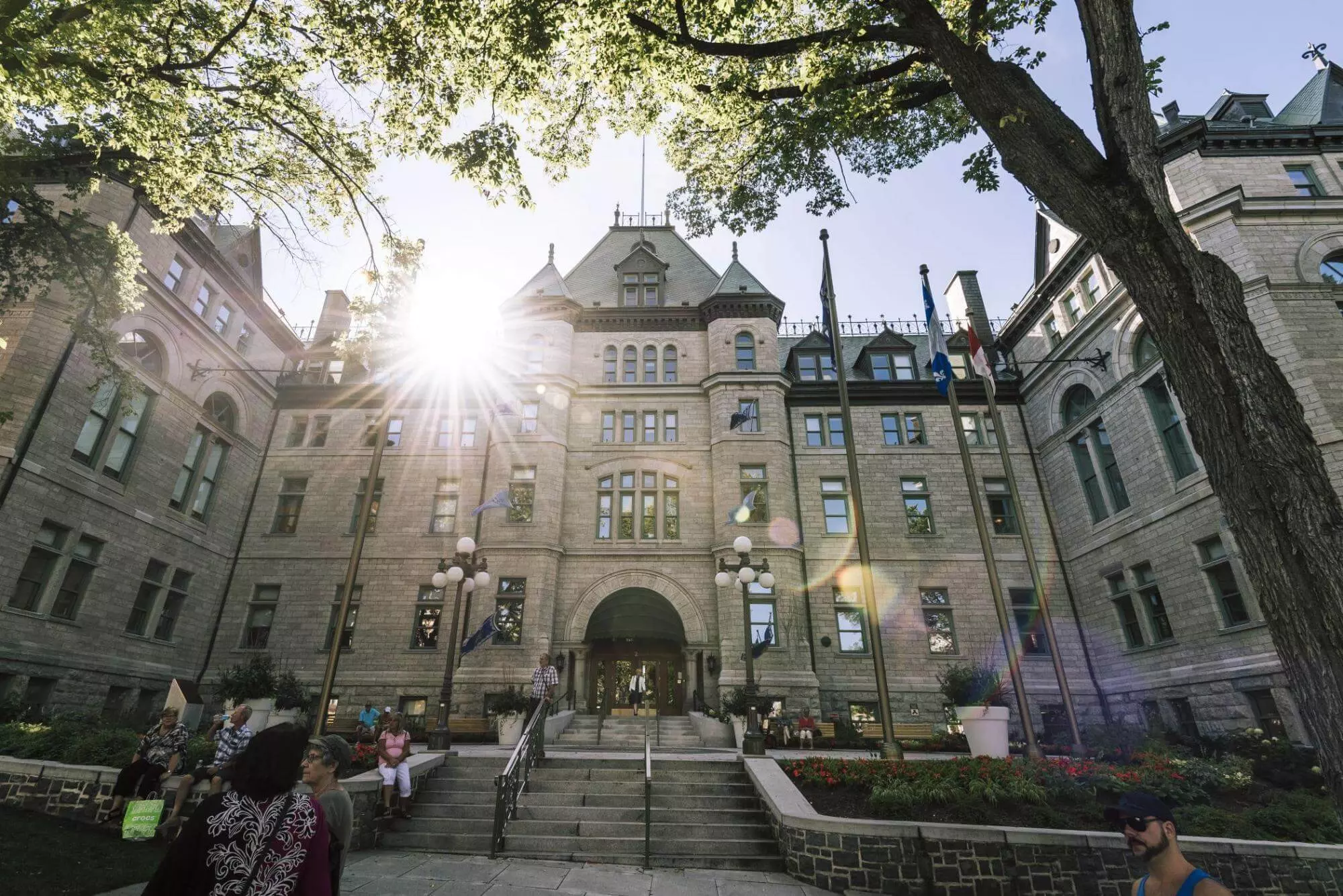

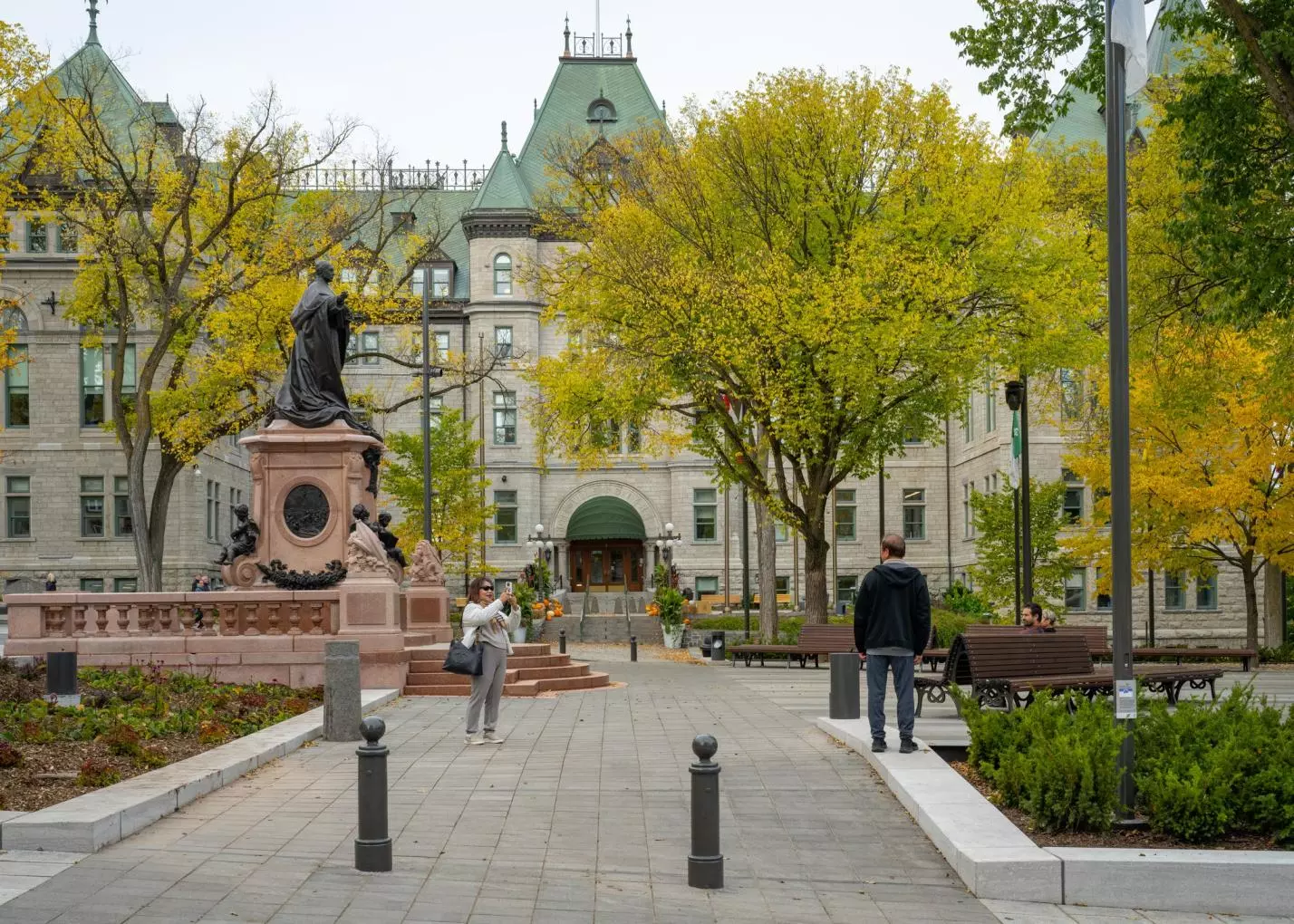
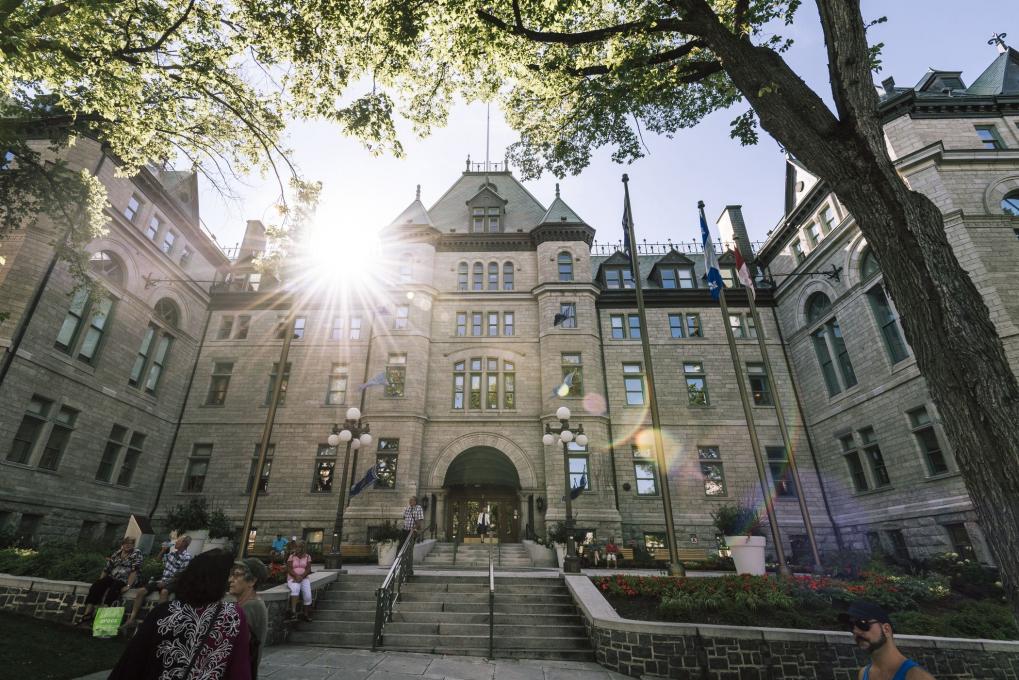
The city hall building in Québec City has been designated a national historical site of Canada on account of its elegant external architecture and rich interior décor, making it one of the most majestic city halls in the country.
Inaugurated in 1896, this building is located on the site of the former Jesuit college. Throughout the year, local residents and tourists come to the public square and gardens next to it to unwind.
What to Do at City Hall and in the Surrounding Neighbourhood?
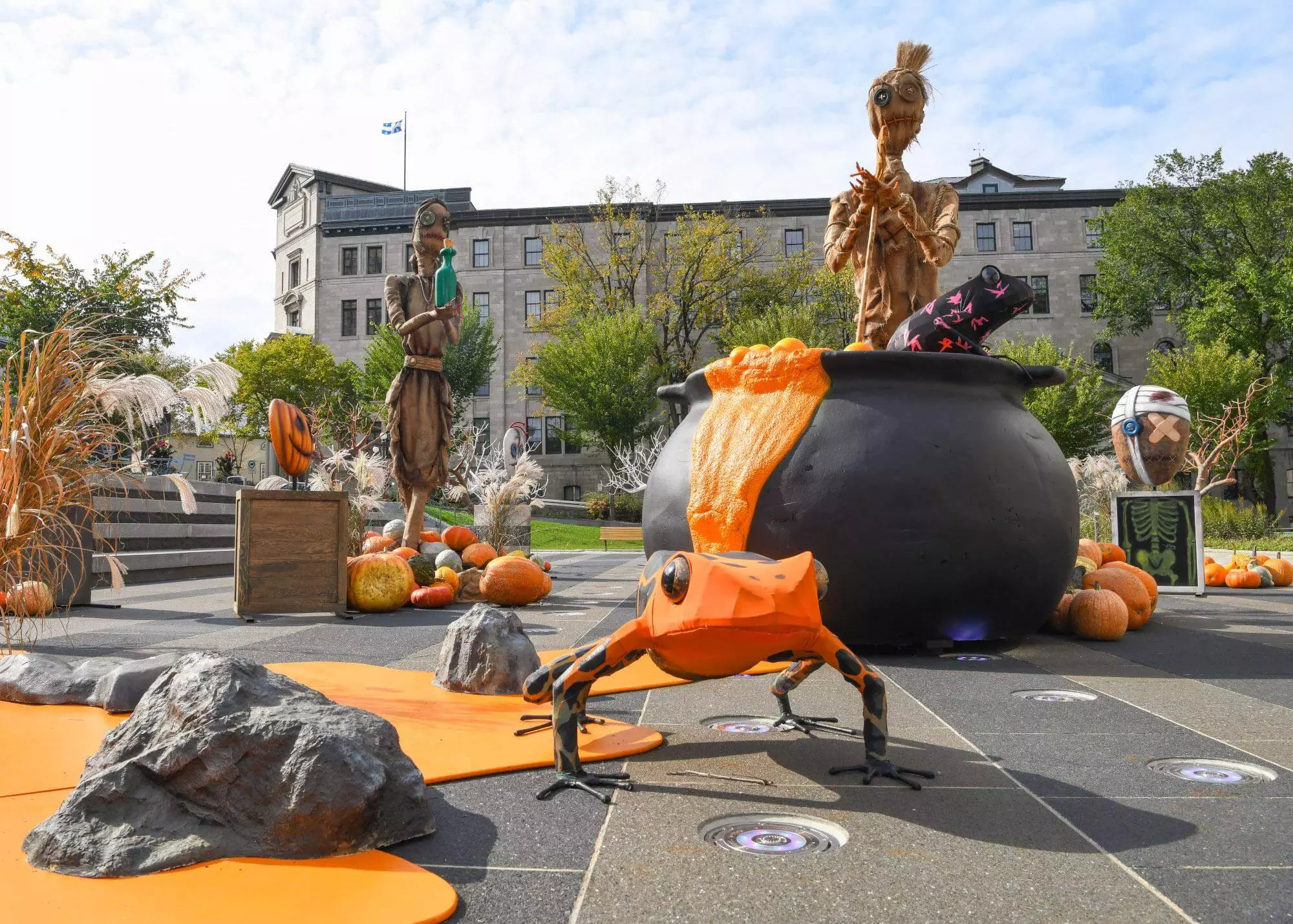
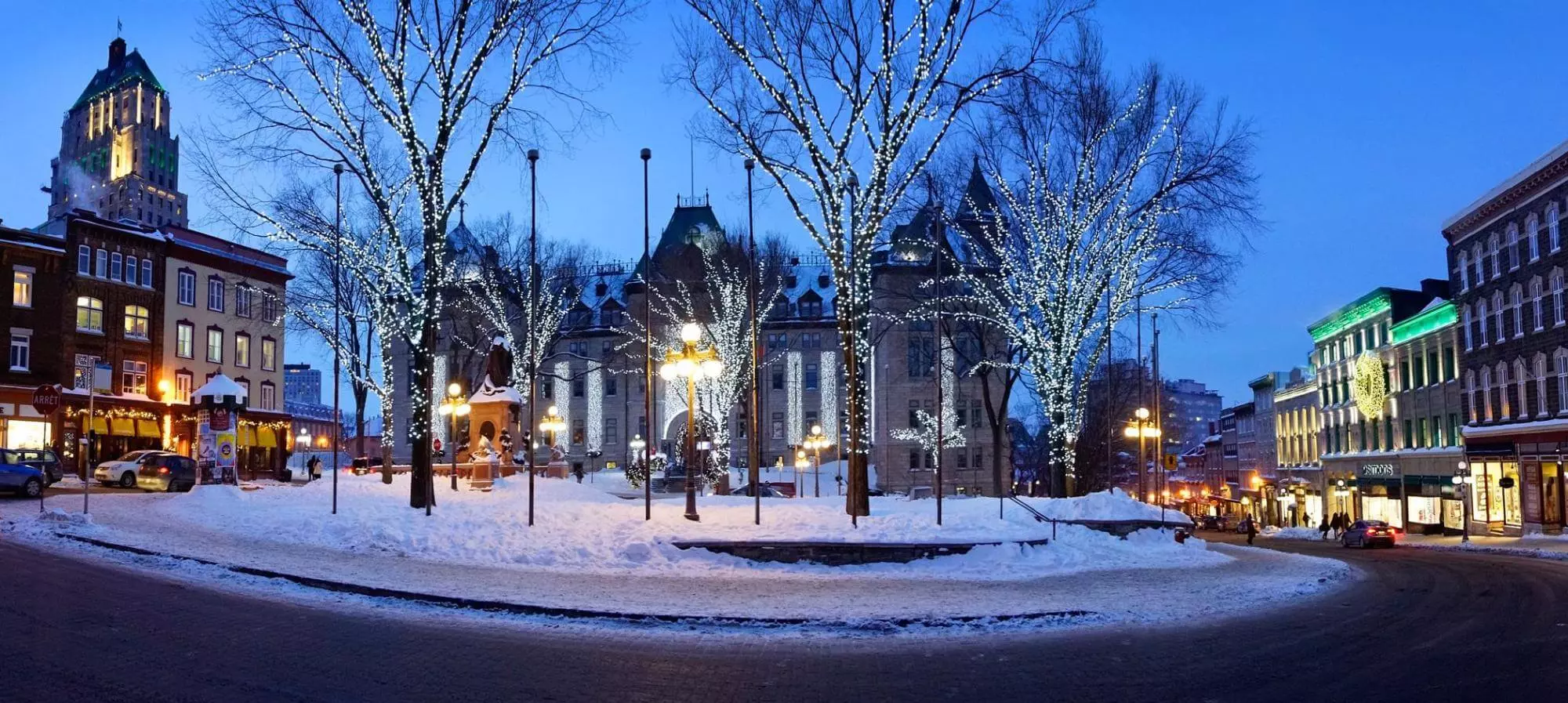
- Stroll through the City Hall Gardens to admire the Halloween decorations in October and the Christmas decorations from November to January.
- See the three stones from the pediment of the former Jesuit college that were integrated into a monument standing before city hall.
- Cool off in the fountains on a hot day.
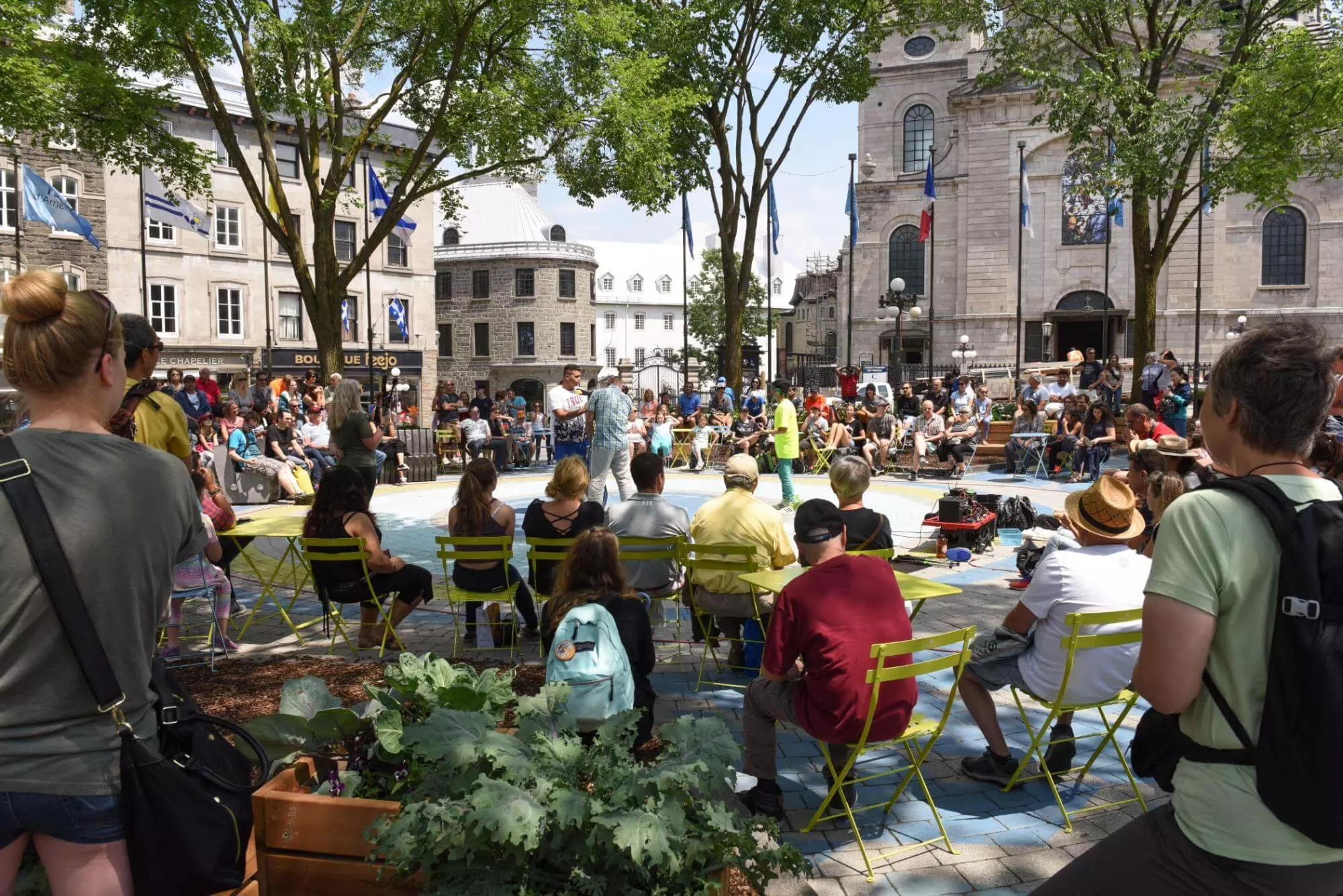
- Enjoy street entertainer performances in the public square.
- Experience the magic of the season at the German Christmas Market in November and December.
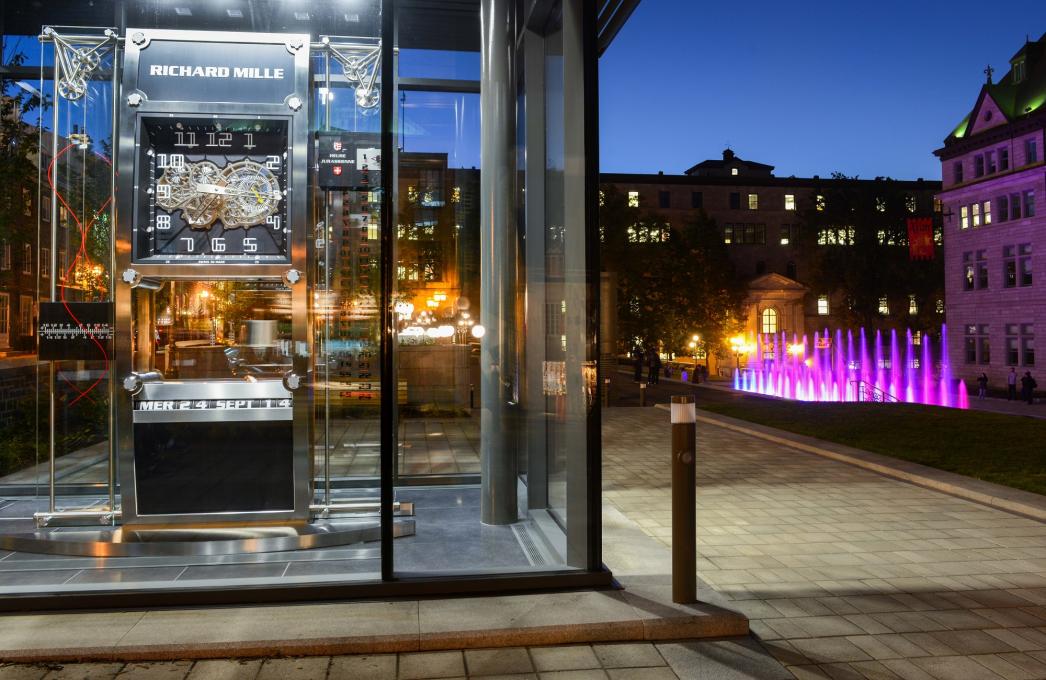
- See the impressive Jura Clock in the City Hall Gardens.
Place de l’Hôtel-de-Ville
The public square called Place de l’Hôtel-de-Ville, located next to city hall, is bordered on three sides by rue De Buade, côte de la Fabrique and rue des Jardins.
From the French Regime until 1875, this public square was where local farmers would come to sell their produce in Upper Town. It was known by a succession of names: Grande Place, Grande Place de la Haute-Ville and Place du Marché. Starting in 1900, Place du Marché became Place de l’Hôtel-de-Ville following the construction of city hall. This square was also referred to as Place Notre-Dame and Place de la basilique until the mid-twentieth century.
City Hall Gardens
These gardens, located along the south side of city hall, are a multipurpose public space with programmable fountains, lush greenery and benches installed during the warmer months. The Jura Clock is a notable landmark in the district.
History of City Hall
The city hall grounds were once the site of the Jesuit college founded during the French Regime. Following the Conquest of the French colony in 1760, the British transformed this educational institution into barracks. In 1871, the garrison departed, and the former college was abandoned, before being ultimately demolished in 1877.
Construction of city hall began in 1894 and ended two years later. The plans for the new building were drawn by architect Georges-Émile Tanguay. The wing along rue Sainte-Anne was added in 1929–1930.
Today, the mayor and councillors who meet at this seat of local government represent the population in one of the six boroughs making up the city.
Québec, QC,
G1R 4S9